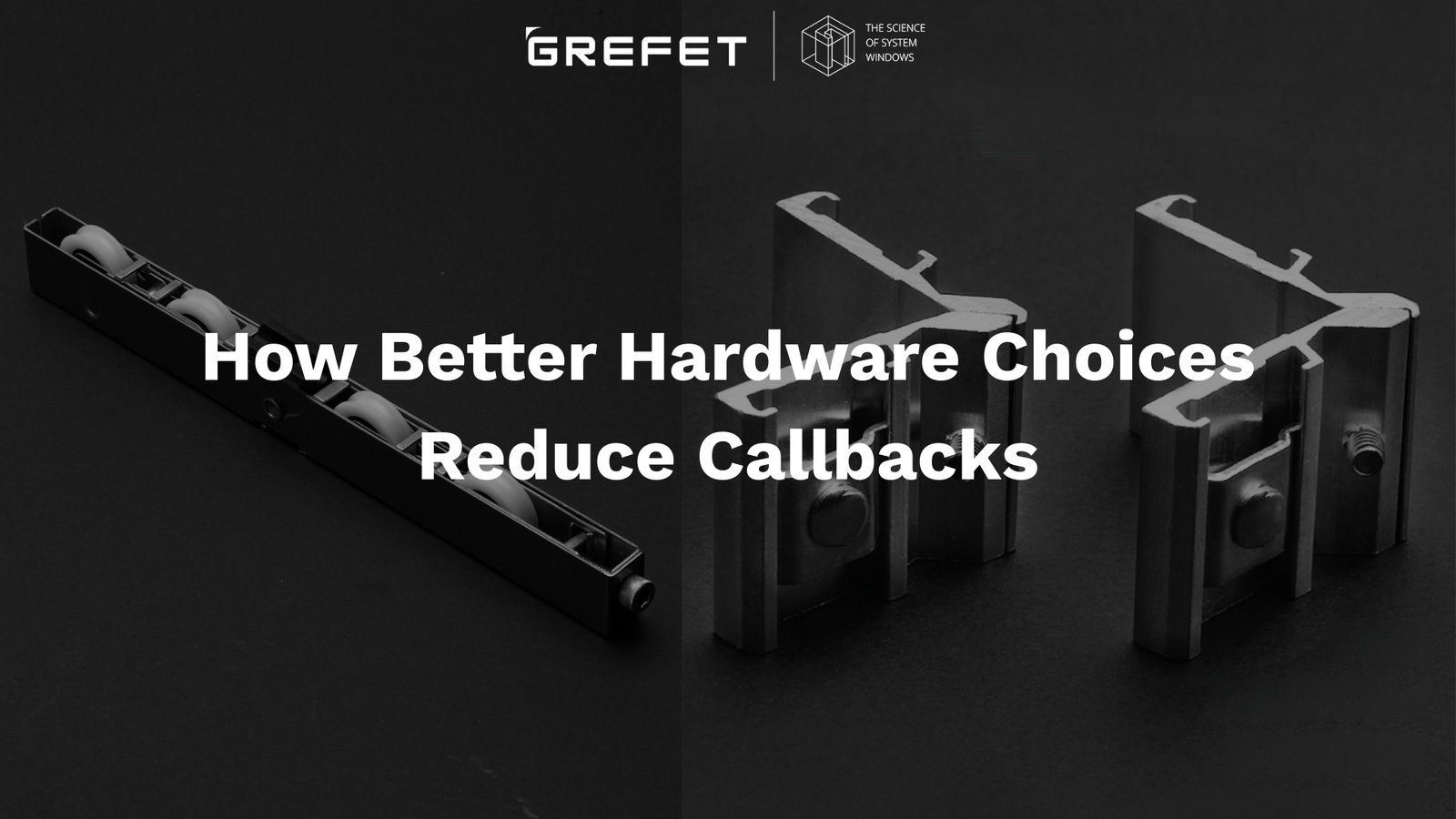
Callbacks are the most costly and frustrating aspects of any window and door project. They nibble away at margins, jam schedules and erode trust quietly. At GREFET what we have realized over many years of working with fabricators and architects is this simple fact: most call backs are not installation issues. They’re late-stage hardware problems. Here’s the thing. Hardware on the other hand is usually a very small line item. In practice, it determines how better hardware choices reduce callbacks.
Why Better Hardware Means Fewer Callbacks
1. Profiles carry the load, and not hardware
The aluminium profiles always turn heads. But the real tension resides in the hardware. Locks, rollers, hinges, and handles deal with:
- Repeated opening and closing
- Weight transfer prices in rail levies and lift techniques
- Alignment changes over time
- Dust, moisture, and temperature variation
Insufficient or generic hardware is ticking timebomb. This results in problems such as sticking, locks not engaging, sagging shutters and noise. Higher quality hardware cuts down on substrate staining at the source.
2. System-Compatible Hardware Prevents Mismatch Failures
What happens when hardware, which is not intended for a particular system is used? One large trigger for callbacks is mishandles. It results in the following:
- Uneven load distribution
- Excessive wear on rollers
- Lock misalignment
- Reduced sealing performance
Hardware at GREFET involves choosing and testing as part of system design, not after. In reality, what this means is less of a surprise after the fact and better, predictable performance over years.
3. Precision Hardware Maintains Alignment Longer
Almost all service calls begin with a single complaint: “The shutter is not running smoothly.” In most of the situations it is because:
- Low-tolerance rollers
- Hinges that deform under load
- Locks that lose calibration
High-accuracy hardware maintains alignment better on thicker glass and larger spans. That, in turn, means less adjusting, fewer site visits and fewer unhappy customers.
4. Long-Lasting Design To Minimize Early Wear Grievances
Hardware doesn’t fail only mechanically. It also fails visually. Peeling finishes, rust marks or blemishes become a concern very fast especially for high-end jobs. Quality hardware uses:
- Corrosion-resistant coatings
- Indian climate appropriate finishes
- Long-cycle tested components
This helps ensure that the product maintains its appearance and performance over time, even after installation.
5. Fewer Recalls Means Better Fabricator Reputation
Callbacks don’t just cost money. They cost credibility. Fabricators using better hardware report:
- Fewer post-installation complaints
- Lower service manpower costs
- Higher referral rates
- Deeper ties with architects and builders
When the system hums along invisibly, everyone comes out ahead.
How GREFET Approaches Hardware Selection
GREFET treats hardware as a performance-critical component of the system. Our approach includes:
- System-specific hardware design and validation
- Real-world usage based load testing
- Interoperability testing between profiles, accessories, and diaphragms
It’s long-term performance, not short-term savings. After all, at the end of the day a window system is only as good as its flimsiest moving part.
Final Thought
Callbacks are rarely random. They tend to be foreseeable consequences of early choices. Upgrading hardware upfront may seem like a modest improvement at first glance. In practice, it amounts to an investment in smoother installations, fewer complaints and long-term peace of mind. At GREFET, we like systems to be boring. They just work.


