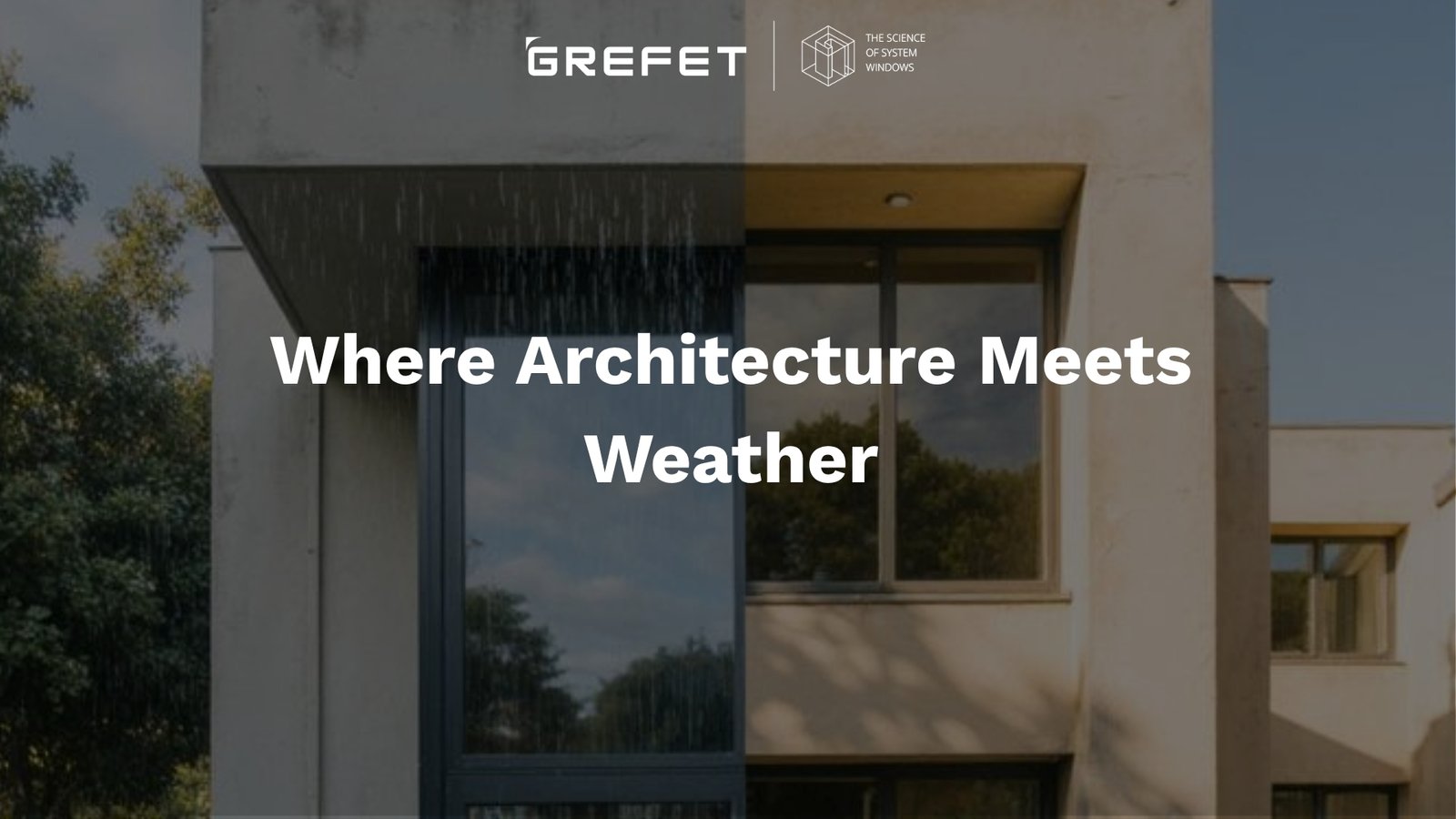
Where architecture meets weather is no poetic notion. It’s a physical reality. Regardless of how bold a design, or how refined its materials, every building ultimately endures the same test – heat, rain, wind and time.
And one of the most underrated components in construction just happens to be at that intersection: the window system. At GREFET we don’t call windows a filler of a wall. For us, they are the intersection between design and the outside world.
The True Interface of a Building
Walls carry loads. Structures provide strength. But windows? They take the hit.
They are the only components that need, at the same time:
- Prevent water from getting in during heavy rain
- Withstand wind pressure at height
- Handle expansion in extreme heat
- Lasts over time as it is insulated and sealed
- They open and close smoothly every single day
This is where most systems stop working-not in the design, but in execution.
Indian Weather Isn’t Forgiving
It’s simple to design for controlled conditions. Designing for India isn’t.
Across regions, windows face:
- High temperatures – leading to expansion and profile stress
- Heavy monsoons putting drainage and sealing systems to the test
- Contaminating tracks and hardware with dust and pollution
- Open or elevated structures with high wind loads
A window that performs in a showroom doesn’t usually make it on site because real conditions are much more aggressive.
Where Most Windows Go Wrong
The issue is not necessarily the material. It’s the thinking.
Some typical gaps we see across projects:
- Windows as a final-stage design choice
- Prioritizing appearance over engineering
- Ignoring installation precision and tolerances
- Relying more on on-site adjustments than systems design
What this essentially means is pretty simple:
It isn’t geared toward the weather system. It’s adjusted after failure.
What Does it Mean to Think in Systems?
We do not see windows as assembled products but rather engineered systems at GREFET.
That shift changes everything:
- Design of profiles per specific loads and spans
- Drainage is part of the system, not improvised on site
- Besides aesthetics, hardware is chosen based on performance
- Fabrication follows defined tolerances, not guesswork
It’s more than just installation. The goal is consistent performance.
The Cost of Getting It Wrong
When the boundary between architecture and weather fails, its consequences extend beyond the window itself:
- Water seepage damages interiors
- Rework delays project timelines
- Client confidence drops
- Maintenance becomes a recurring cost
Most importantly, the original design intent has been compromised.
The GREFET Perspective
A building is not a fortress and should not have to battle its surrounding environment. It should be prepared for it. That preparation is not just surface level, though. It occurs at the places when the building opens outward.
That’s where we work. Because when all is said and done, architecture is only as good as the window systems that guard it.


