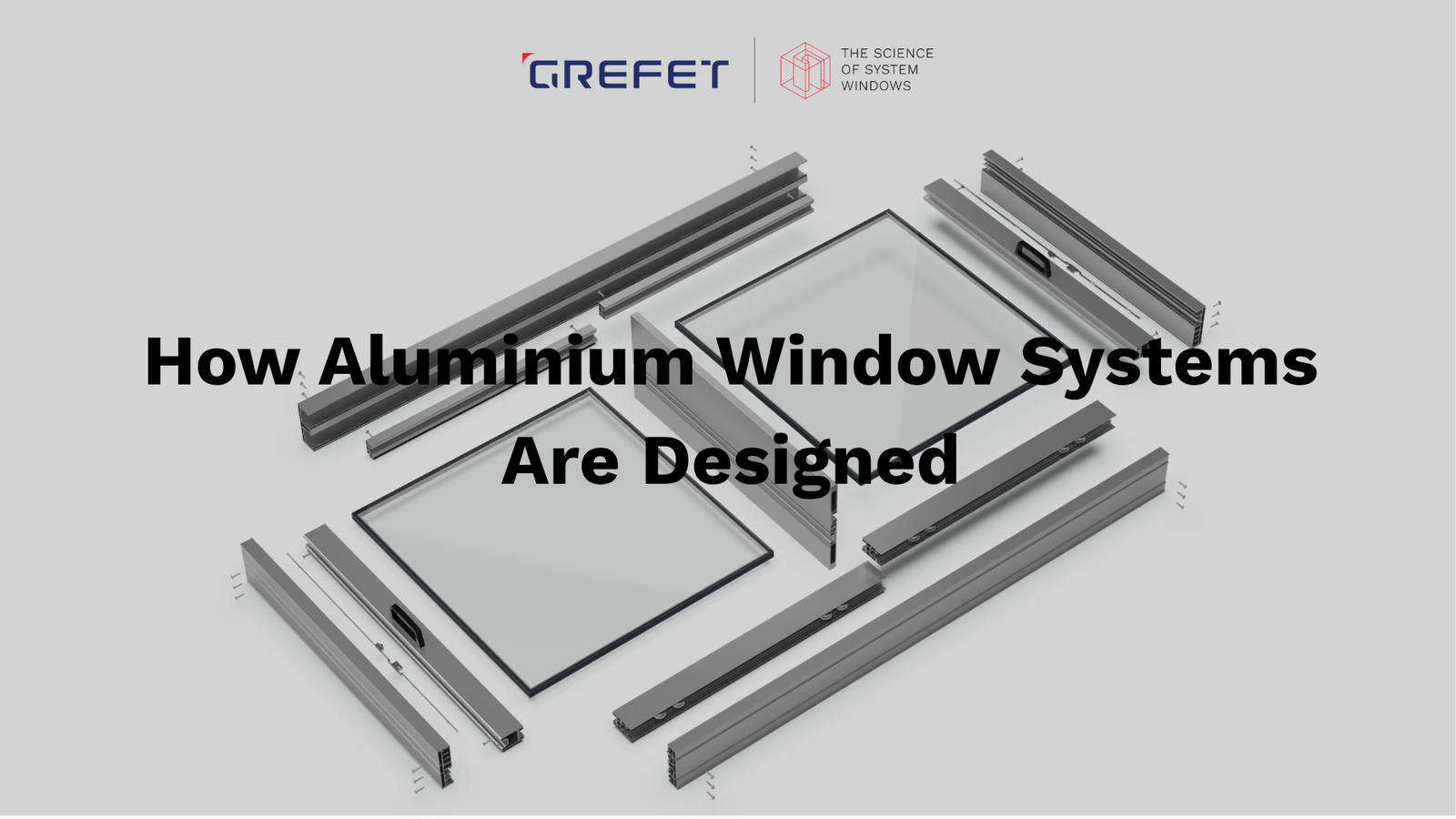
We do not consider aluminium windows just frames and glass at GREFET. We develop them as integrated systems-fashioned to operate in actual environments. When you see a well-built aluminium window system, what you’re seeing is the work of thoughtful design and precision manufacture. There are a few specific steps to explaining how aluminium window systems are actually designed.
1. Understanding the Application First
Every system starts with context. Before we draw the first profile, we already defined where and how is going to be used the window.
We consider:
- Building type (residential, commercial, high-rise)
- Wind load and structural requirements
- Exposure to noise, rain and dust
- Opening style and usage frequency
At GREFET we build systems based on real Indian conditions and not theoretical assumptions.
2. Profile Engineering and Design
Yes, the aluminium profile is the backbone of the system. Depending on the load calculations, we design profiles with required thickness of wall and geometry with reinforcements.
What this includes:
- Design the cross section for strength and defection minimization
- Insulation and rigidity under control thanks to multi-chamber profiles
- Tight tolerances to ensure a close fit with accessories
Profiles are not simply molded-they’re designed with performance in mind.
3. System-Based Hardware Integration
Aluminium window systems incorporate hardware from the design stage itself unlike conventional fabrication.
We define:
- Compatibility with hinges, rollers, and locking systems
- Load-bearing capacity of hardware
- Hundreds of thousands of cycles without any issues
This makes sure everything works together, not as an afterthought.
4. Sealing and Drainage Design
Poorly designed windows have their major points of failure in water and air infiltration.
Our systems include:
- Airtight EPDM gaskets, multi-layer
- Engineered drainage routes to funnel water away
- Leakage preventing pressure equalization chambers
What this actually means is improved weather resistance and long-term durability.
5. Glass Selection and Compatibility
Glass isn’t a filler — it’s a vital performing element.
We design systems to accommodate:
- Double or triple glazing
- Laminated and toughened glass options
- Acoustic and thermal performance requirements
These profiles are optimized to safely accommodate each individual thickness of glass.
6. Thermal and Acoustic Performance Engineering
Modern aluminium window systems need to have more than just the basics.
At GREFET, we focus on:
- Options for heat transfer reduction by thermal break
- Tight sealing and glazing combinations for acoustic insulation
- Minimizing open spaces and vibrations which cause sound to leak
The outcome is an improved comfort inside.
7. Manufacturing Precision and Quality Control
A great design goes nowhere without execution.
We ensure:
- Extrusion quality consistency
- CNC-based cutting and machining
- Every step of the way faces strict quality checks
It removes site-level guesswork and guarantees reproducible performance.
8. Installation System and Standardization
The best system useless if not installed properly At some point in time, we all have bought any electronic product from a store, or an E-commerce online shopping platform and we know the amount of time that passes for every gadget before proper use after unboxing it. That’s why installation guidelines become part of the system.
Key elements:
- Standardized assembly processes
- Defined tolerances for fitting
- Trained fabricator network for execution
This way, the system operates precisely as intended.
Final Thought
When it comes to designing aluminium window systems, this is not about designing something that looks attractive. It’s about crafting a solution that continues to work over time. At GREFET, our systems are interrelated; every component-from profile to hardware to sealing-complements itself. That’s the difference between a window that merely exists and one that works.


