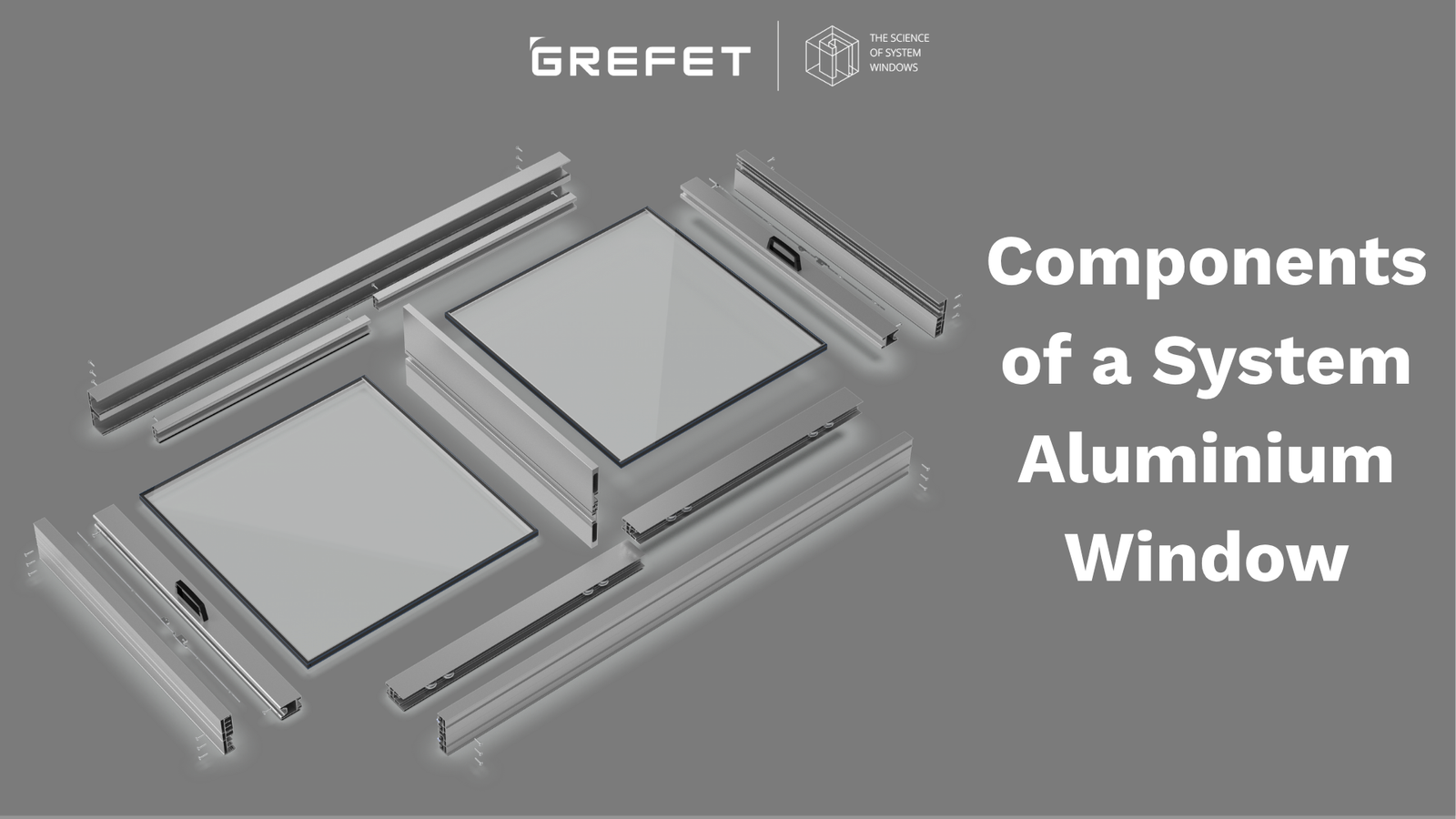
A system aluminium window is not simply a frame with glass. It’s an intricately designed structure in which each part collaborates to provide power, insulation and durability. We take great care in choosing each component of the system here at GREFET, so the completed window works exactly as we promised, not only on day one, but for years as well. So, what exactly makes up a system aluminium window?
1.Aluminium Profiles (The Structural Backbone)
The profile is the heart of the entire system. Unlike traditional manufacturing, system profiles are engineered specifically for your applications.
At GREFET, profiles aim to:
- Manage defined wind loads and span dimensions
- Maintain structural integrity over time
- Support multiple glazing options
What that means in reality is consistency. Each window acts precisely how it was intended.
2. Glass (Performance Layer)
Glass isn’t just about visibility. It is a key player in insulation, acoustics and energy efficiency.
Common glazing options include:
- Double glazing for thermal and sound insulation
- Toughened glass for safety
- Laminated glass to improve noise insulation and safety
The structure is designed to hold glass without allowing any air flow.
3. Hardware (Movement & Functionality)
At the bottom right corner, there is hardware which is where you interact with the window. From a design point of view, it’s not an afterthought in a system aluminium window.
Key hardware components:
- Handles for smooth operation
- Hinges designed for load-bearing performance
- Locking systems for security
At GREFET, hardware merges with profiles for a low-stress operation on the frame.
4. Gaskets & Seals (Weather Protection)
This is where performance in earnest gets real. Gaskets and seals keep air, water and dust out.
They are responsible for:
- Airtight sealing
- Water resistance during heavy rains
- Reduction in external noise
Even the best-looking window will fail in real-world conditions if it is not properly sealed.
5. Reinforcements & Cleats
To keep the strength in larger spans, system aluminium windows often feature internal reinforcements and corner cleats.
These ensure:
- Structural stability
- Proper alignment over time
- Resistance to deformation
This becomes more important with larger openings and high-rise applications.
6. Drainage System (Invisible but Critical)
A drainage system engineered to evacuation any water that enters the outer chamber.
Key features:
- Controlled water flow channels
- Prevents water accumulation
- Protects interiors from leakage
It’s not visible, but it’s one of the most crucial pieces of the system.
7. Surface Finish (Durability & Aesthetics)
The finish is not merely cosmetic — it affects how the window performs. It is also resistant to corrosion and wear for the aluminium underneath.
Common finishes:
- Powder coating for durability
- Anodized for a luxe metallic finish
At GREFET, the finishes are selected to endure Indian weather conditions without fading or peeling.
Why These Components Matter Together
Each component is engineered to work together as one unit, which has a reason why a system aluminium window gets us so right. You won’t do that with jigsaw fabrication.
At GREFET, we don’t view these as disparate pieces. We look at them as a fully-formed system designed for:
- Longevity
- Performance
- Consistency
That’s the difference between a window that performs well today and one that delivers for years.


