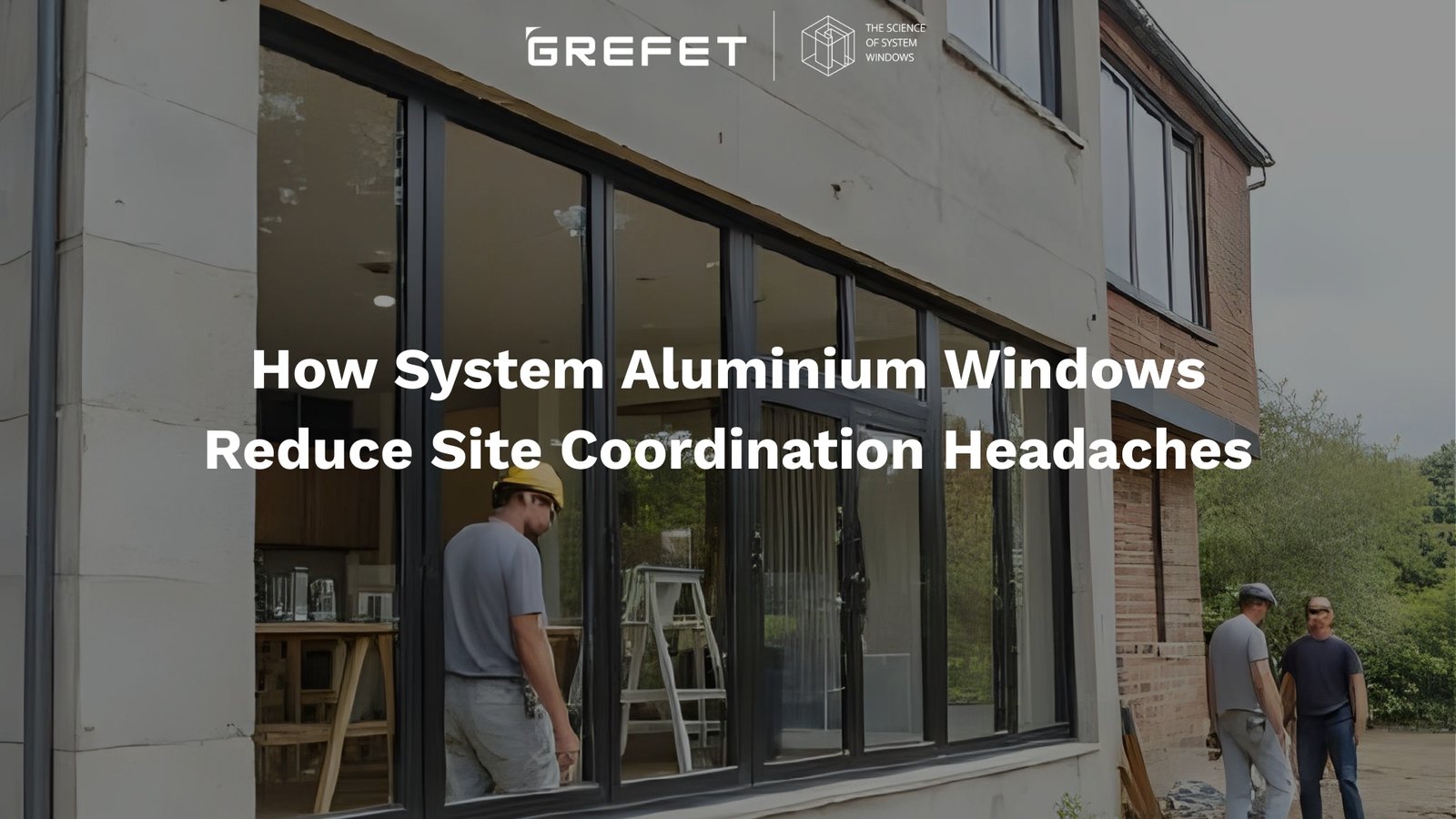
Site coordination is where good projects slow down and average projects derail. Delays, miscommunication, last-minute fixes, and blame games usually don’t come from poor intent. They come from fragmented systems. This is exactly where system aluminium windows quietly change the way a site runs.
At GREFET, we’ve seen one pattern repeat across projects of every scale. The more moving parts a window has on site, the harder it becomes to coordinate. System aluminium windows reduce those moving parts by design.
The Real Problem with Conventional Window Coordination
Traditional aluminium windows are often assembled through multiple disconnected decisions. Profiles from one source. Hardware from another. Glass finalised late. Installation methods figured out on site.
What this really means is:
- Architects issue drawings that can’t be executed as planned
- Contractors chase multiple vendors for clarifications
- Fabricators adjust designs mid-way to “make it work”
- Installation teams face surprises at the opening stage
Each adjustment creates a new coordination loop. More calls, more approvals, more chances for error.
System Aluminium Windows Replace Guesswork with Structure
System aluminium windows work differently. Engineers design every component as part of a predefined system. They decide the profiles, hardware, gaskets, and glass thicknesses long before the system reaches the construction site.
At GREFET, systems are tested as complete assemblies, not as individual parts. That single shift removes a huge layer of site-level coordination.
Here’s how.
Clear Specifications From Day One
System aluminium windows come with fixed technical limits. Maximum sash sizes. Glass combinations. Drainage details. Installation tolerances.
This clarity helps:
- Architects lock specifications early
- Structural consultants align openings correctly
- Contractors plan sequencing without uncertainty
When everyone is working from the same system manual, interpretations reduce dramatically.
Fewer Vendors, Fewer Conflicts
One of the biggest site headaches is managing too many suppliers for one element. With non-system windows, profiles, hardware, sealing accessories, and even fasteners often come from different sources.
System aluminium windows consolidate responsibility. The system brand defines what works together and what doesn’t.
For site teams, this means:
- One technical reference point
- Faster clarification cycles
- Clear accountability when issues arise
Coordination doesn’t just get easier. It gets cleaner.
Predictable Fabrication and Installation
Because system aluminium windows are designed to be fabricated in a specific way, the fabrication process becomes repeatable. Profiles arrive cut-ready. Hardware positions are defined. Tolerances are not left to installer judgement.
This predictability flows directly to the site:
- Openings are prepared correctly
- Installation teams follow standard methods
- Adjustments on site drop significantly
What this really means is fewer delays at the most time-sensitive stage of the project.
Reduced Design Revisions Mid-Construction
Late-stage design changes are usually triggered by performance concerns. Wind load. Water leakage. Smoothness of operation.
System aluminium windows are tested for these conditions before they are specified. That upfront engineering prevents panic revisions when the building is already progressing.
For project managers, this reduces:
- Revisions to shop drawings
- Rework at the installation stage
- Approval bottlenecks
The system absorbs complexity long before it reaches the site.
Less Dependency on Individual Skill Levels
Another overlooked coordination issue is inconsistent skill on site. When windows depend heavily on installer craftsmanship, outcomes vary.
System aluminium windows narrow that variability. The system standardises installation methods. The profiles build tolerances into their design. System geometry guides precise hardware alignment.
At GREFET, this ensures the performance of the window doesn’t collapse if one team changes or one individual makes a mistake.
Why This Matters More on Larger Projects
As project scale increases, coordination complexity grows exponentially. Multiple towers. Phased handovers. Multiple contractors.
System aluminium windows bring predictability into that chaos. They allow windows to behave like a controlled component rather than a custom-built gamble at every opening.
That’s why large residential, commercial, and mixed-use projects increasingly lean toward system-based aluminium windows.
The GREFET Perspective
At GREFET, we don’t see windows as isolated elements. We see them as interfaces between design, structure, and daily use. We understand how system aluminium windows reduce site coordination headaches.
By building complete aluminium window systems, we reduce friction where it hurts most. On site, under deadlines, with multiple stakeholders involved.
And when coordination gets simpler, project quality quietly improves.


